

Paper Summaries vs. Evidence Extraction: What Should You Save?
Save both, but for different jobs. A paper summary is a fast orientation layer: it tells you what a study claims and whether it belongs in your reading pile. Evidence extraction is the audit layer: it records the specifi
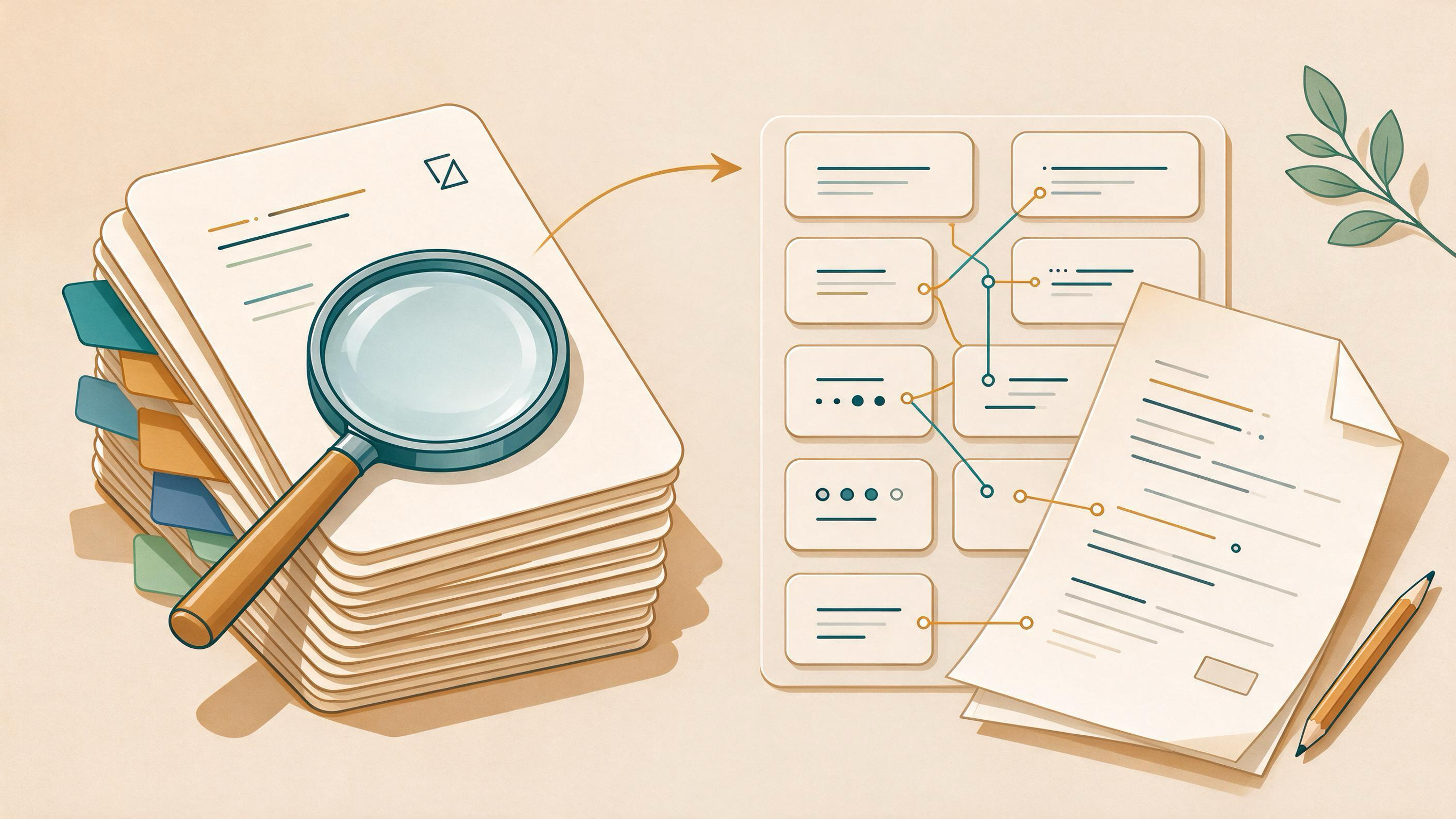
Reading List vs. Evidence Matrix: What Does Each One Miss?
A reading list answers "what should I read?" An evidence matrix answers "what does each source actually let me claim?" If you are finishing a course paper, a thesis chapter, or a first manuscript, you probably already ha

Reference Manager Notes vs. Markdown Notes for Literature Reviews
A literature review produces two different kinds of output at once: a set of bibliographic records that must resolve to the right works, and a body of notes and prose that must carry an auditable trail from claim to sour

Research Notebook vs. Reference Manager: Which Holds What?
A reference manager holds the identity of a source. A research notebook holds the reasoning you build on top of it. The practical answer to "which holds what" is that neither should hold everything: the reference manager

Research Paper Organization: A Complete System for Notes, PDFs, and Evidence
You are finishing a course paper, a thesis chapter, or your first manuscript, and the next project is already on the horizon. The problem is rarely a lack of sources. It is that your notes live in three apps, your PDFs a

Research Project Closeout: Preserve Sources, Decisions, and Search History
A research project is not finished when the last analysis runs. It is finished when someone else—a coauthor, a reviewer, a successor in the lab, or your future self—can reconstruct what you searched, what you kept, why y
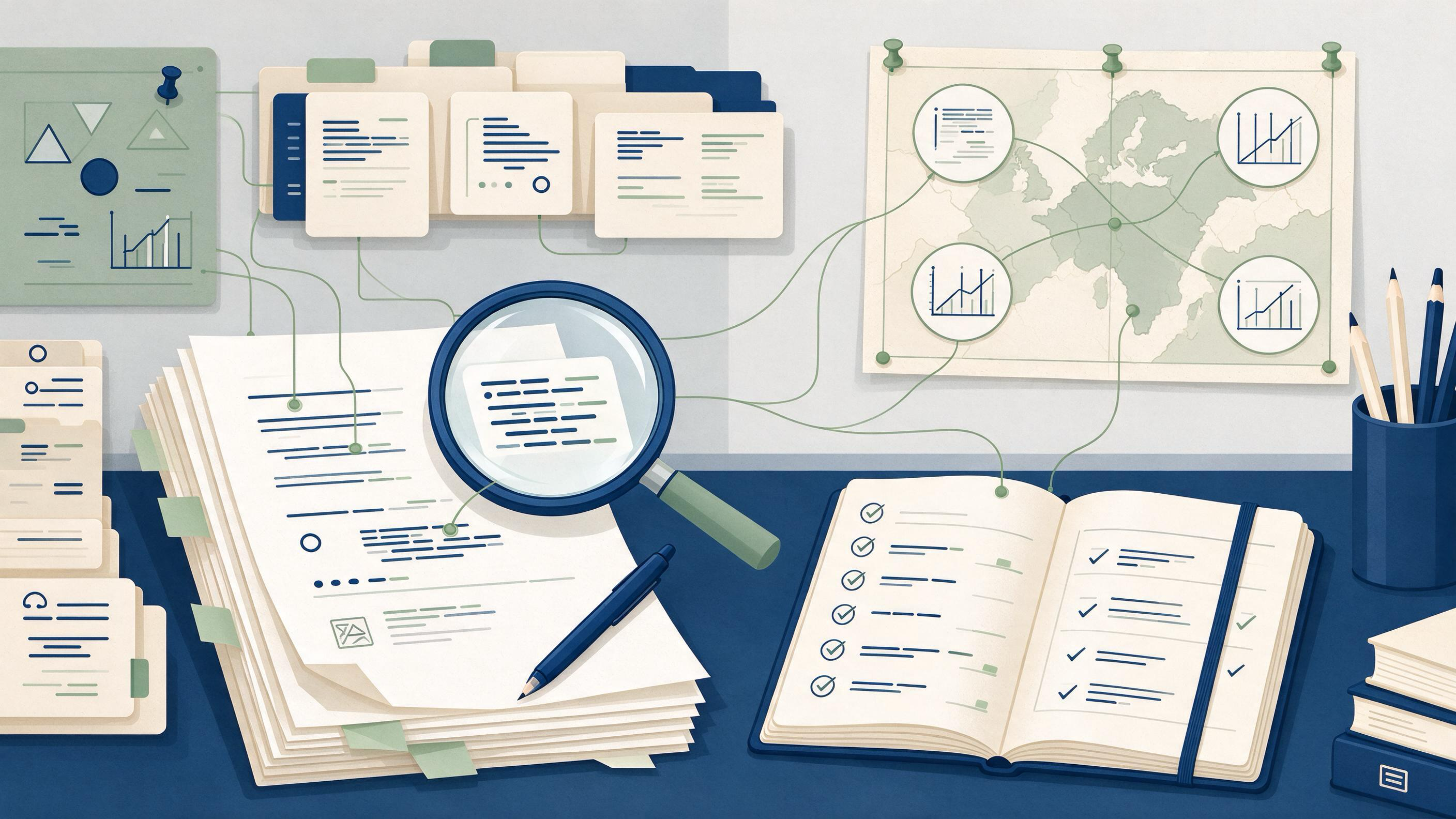
Research Revision Workflow: From Feedback to Verified Final Draft
Revision is not a single editing pass. It is a controlled sequence: you receive feedback, decide what it actually requires, change the manuscript, and then prove that every claim, citation, and method statement still hol

Shared Zotero Library vs. Shared Drive Folder for Research Teams
A shared Zotero library and a shared drive folder solve different halves of the same problem. Zotero is built to organize references: one item can sit in several collections without being duplicated, tags can describe to

Source-by-Source Outline vs. Thematic Outline: Choosing the Right Structure for an Evidence Brief
You have a folder of papers and a deadline. The first structural decision you make — whether to outline paper by paper or theme by theme — shapes how you search, what you extract, and whether your brief answers a questio

The Search Strategy Exists Only in One Person's Notes: Rebuilding an Auditable Method Trail
A manuscript is nearly ready. The screening is done, the synthesis reads well, and the coauthors are trading final edits. Then someone asks the question that stalls the room: "What exactly did we search, and where is it