
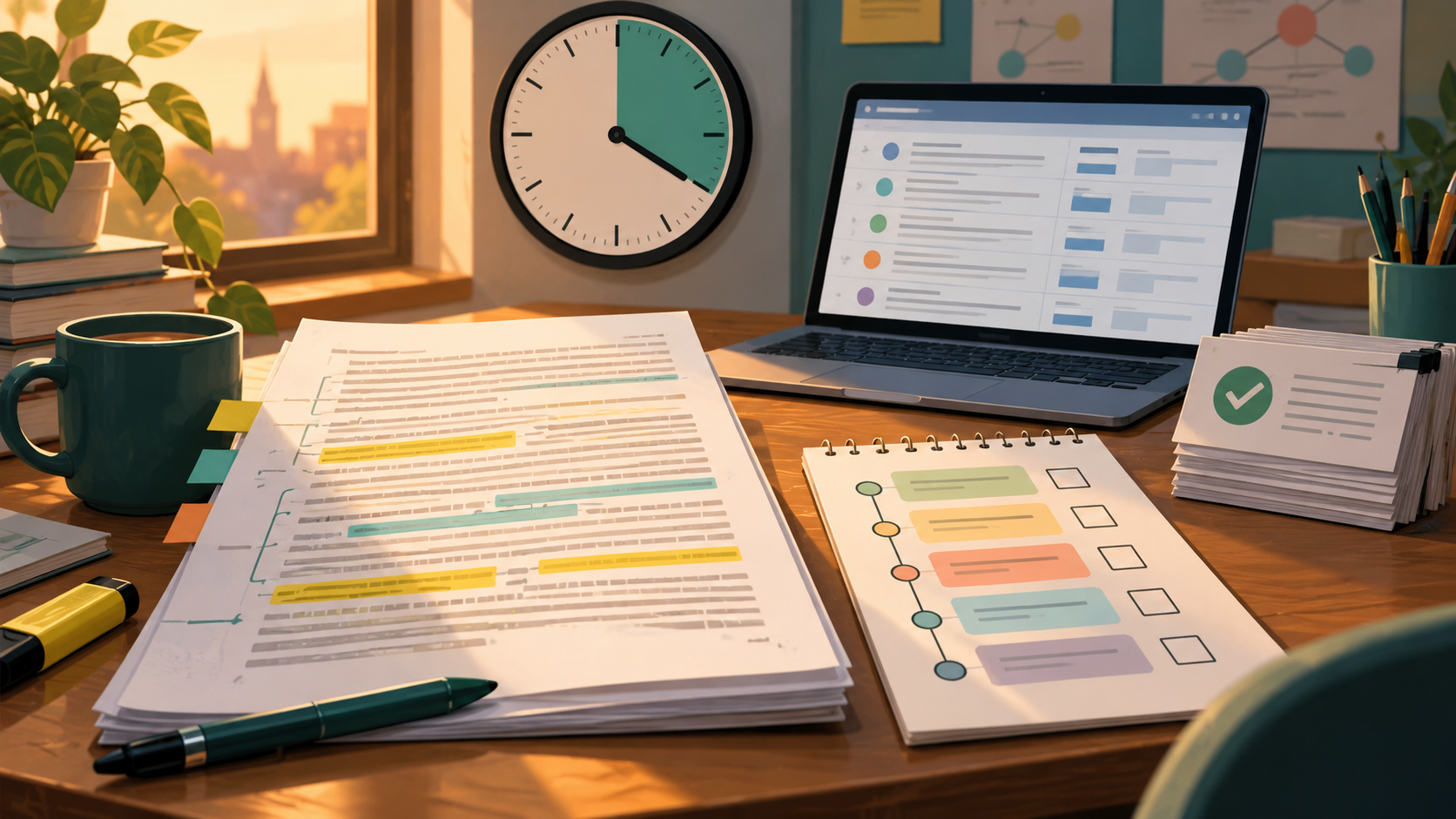
A 90-Minute Evidence-Gap Rescue Plan Before Submission
You have a deadline, a rubric, and a draft with soft spots. Some claims rest on a single citation, some have none, and you are not sure every reference is real. Ninety minutes is enough to triage those gaps, retrieve tar
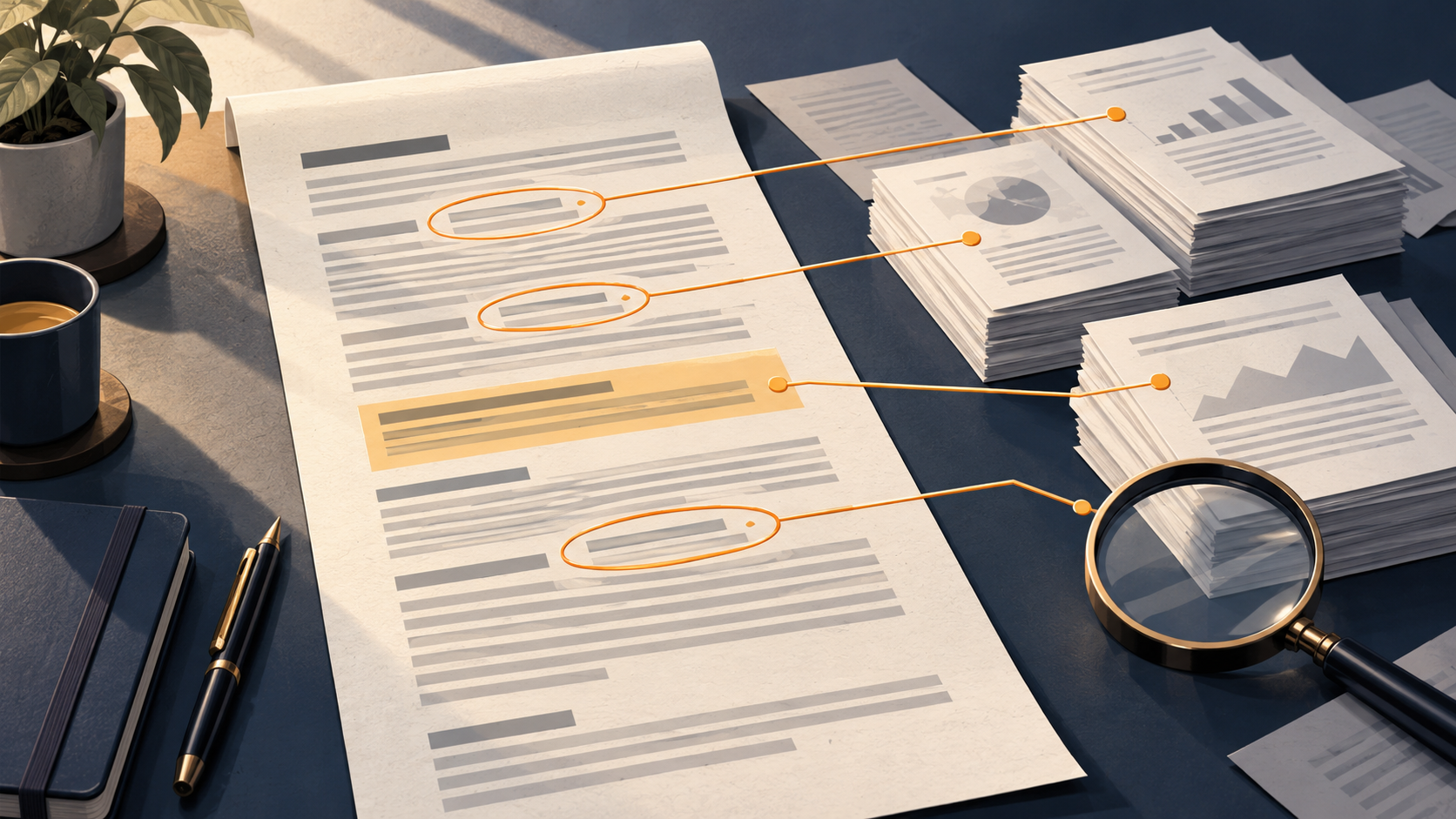
A Client Briefing Contains Claims Nobody Can Trace: Running an Enterprise Provenance Audit
A briefing lands on the partner's desk the morning it is due. The argument is clean, the recommendations are confident, and three of the load-bearing claims have no visible source. One cites "industry data" with no year.

Abstract Screening vs. Full-Text Screening: Where Should the Decision Happen?
Screening decisions belong at two different points, and the right point depends on what the record can actually tell you. Abstract screening is the fast, broad filter: you decide from titles and abstracts whether a recor
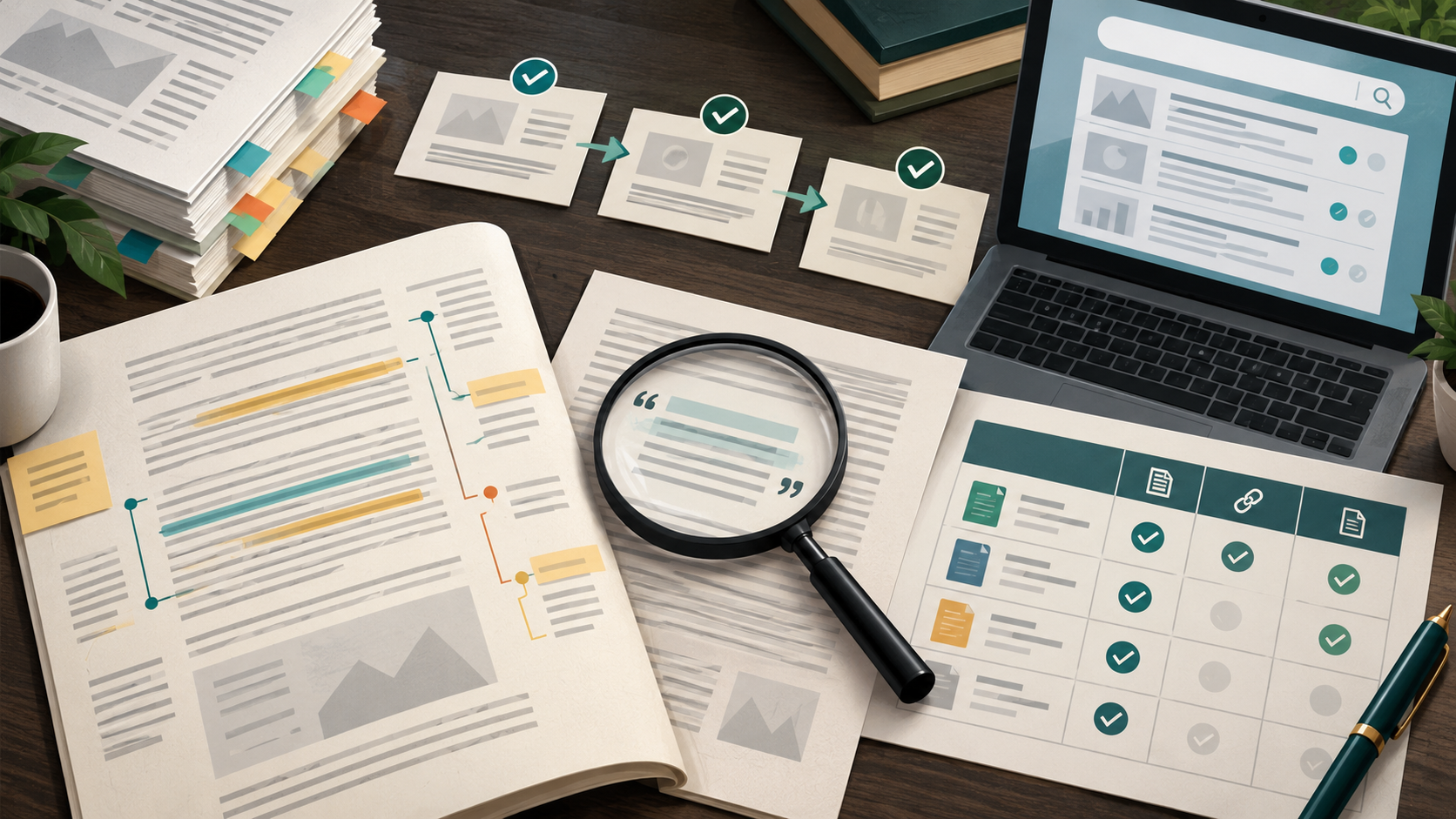
AI-Assisted Research Verification: A Human-Checkable Workflow
AI search can get you to a plausible-looking reference in seconds. The harder question is whether that reference, and the claim you attach to it, will survive a reviewer who opens the PDF. This guide lays out a verificat
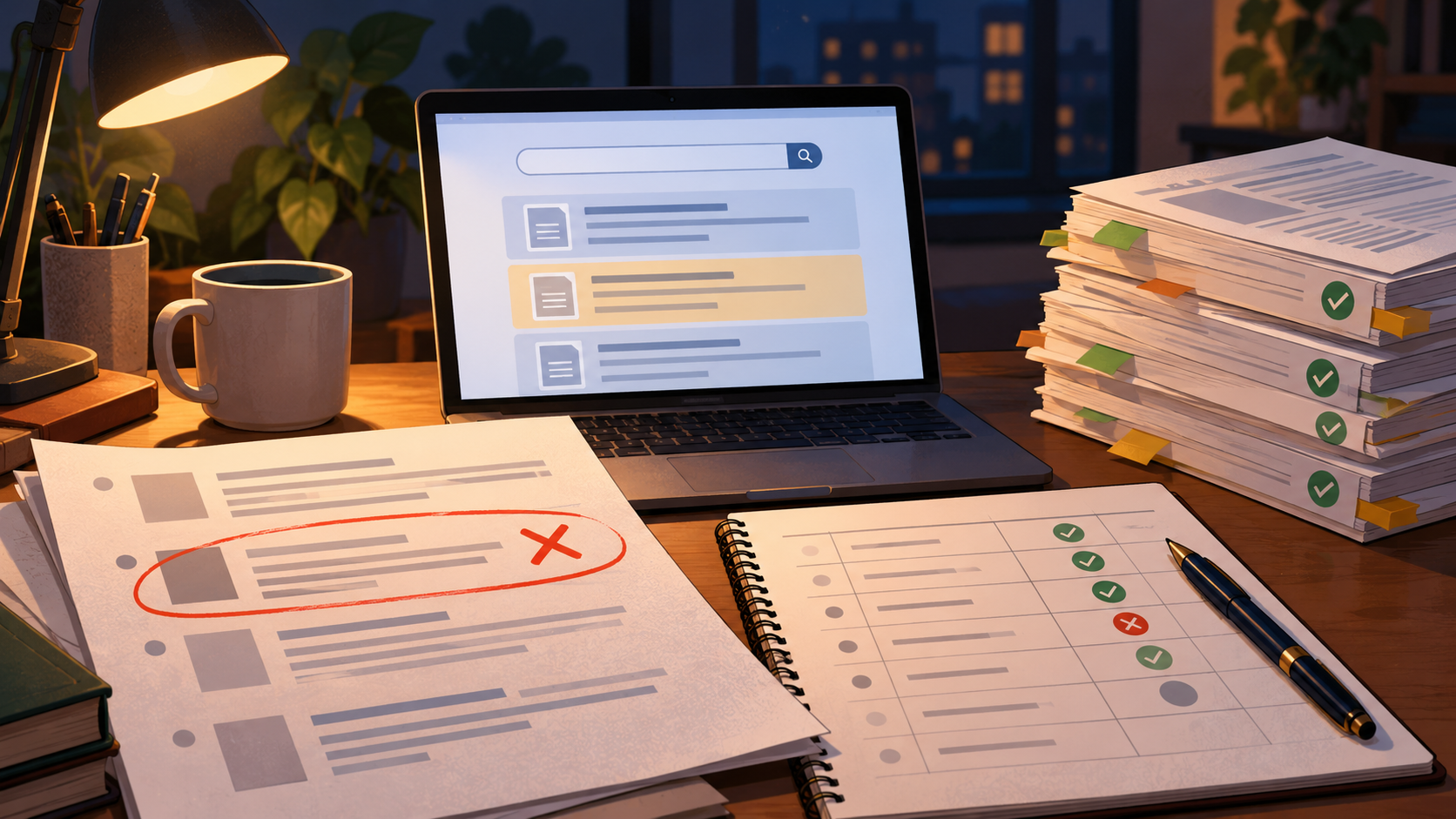
An AI Tool Suggested a Paper That Does Not Exist: A Repair Workflow for Deadline Research
You are two days from a course-paper deadline. Your draft cites a study that fits your argument perfectly, but when you paste the title into a database, nothing comes back. The author name is plausible, the journal sound

Backward vs. Forward Citation Searching: What Does Each Reveal?
Backward citation searching follows a paper's reference list into the work it builds on. Forward citation searching follows the papers that later cite it. On the same task — assembling a defensible evidence base for a ti

Broad Search vs. Narrow Search: Which One Finds the Evidence You Need?
Under a deadline, the question is rarely "should I search broadly or narrowly?" It is "which move gets me to defensible evidence fastest?" Broad recall and narrow precision are not rival philosophies; they are two ends o
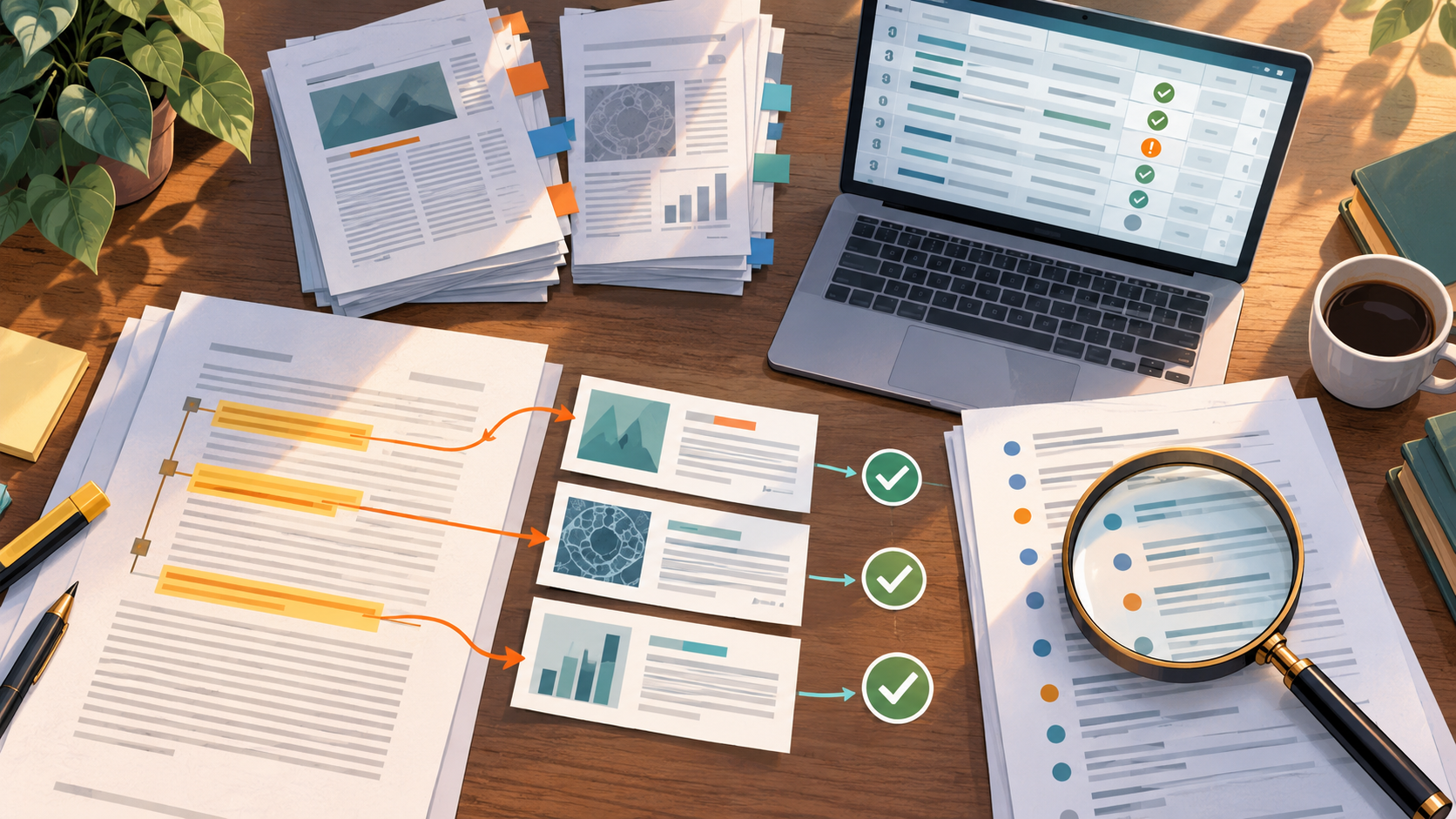
Citation Verification: A Complete Pre-Submission Workflow
Citation verification is the practice of confirming, for every reference in a manuscript, that the work exists, that its metadata is correct, that you are citing the right version, that its correction status is known, th

Crossref vs. PubMed Metadata: Why the Same Paper Can Look Different
A single paper can appear under slightly different titles, author strings, dates, and subject terms depending on whether you meet it through a publisher deposit or through PubMed. For a clinician or researcher building a

Database Search vs. Natural-Language AI Search for Evidence Gaps
You have a deadline, a rubric that rewards a defensible literature base, and a nagging worry that you have missed a key paper. The question is not whether databases or natural-language AI search are "better" in the abstr