

How to Replace Weak Secondary Citations with Original Evidence
A secondary citation is a claim you are carrying on someone else's authority: a review, guideline, editorial, or textbook says a study found something, and you cite the study without reading it. That shortcut is fine for

How to Rescue a Literature Search That Finds Too Few Papers
A thin result list usually means your search is too narrow, not that the field is empty. Before you tell a supervisor or a rubric that "there is nothing on this topic," run a structured rescue: check whether your concept

How to Rescue a Literature Search That Returns Thousands of Results
A search that returns thousands of records is not a dead end. It usually means the question is still too loose to be searched well. The fix is a short diagnostic loop: name the noisy concept, add population and study-des
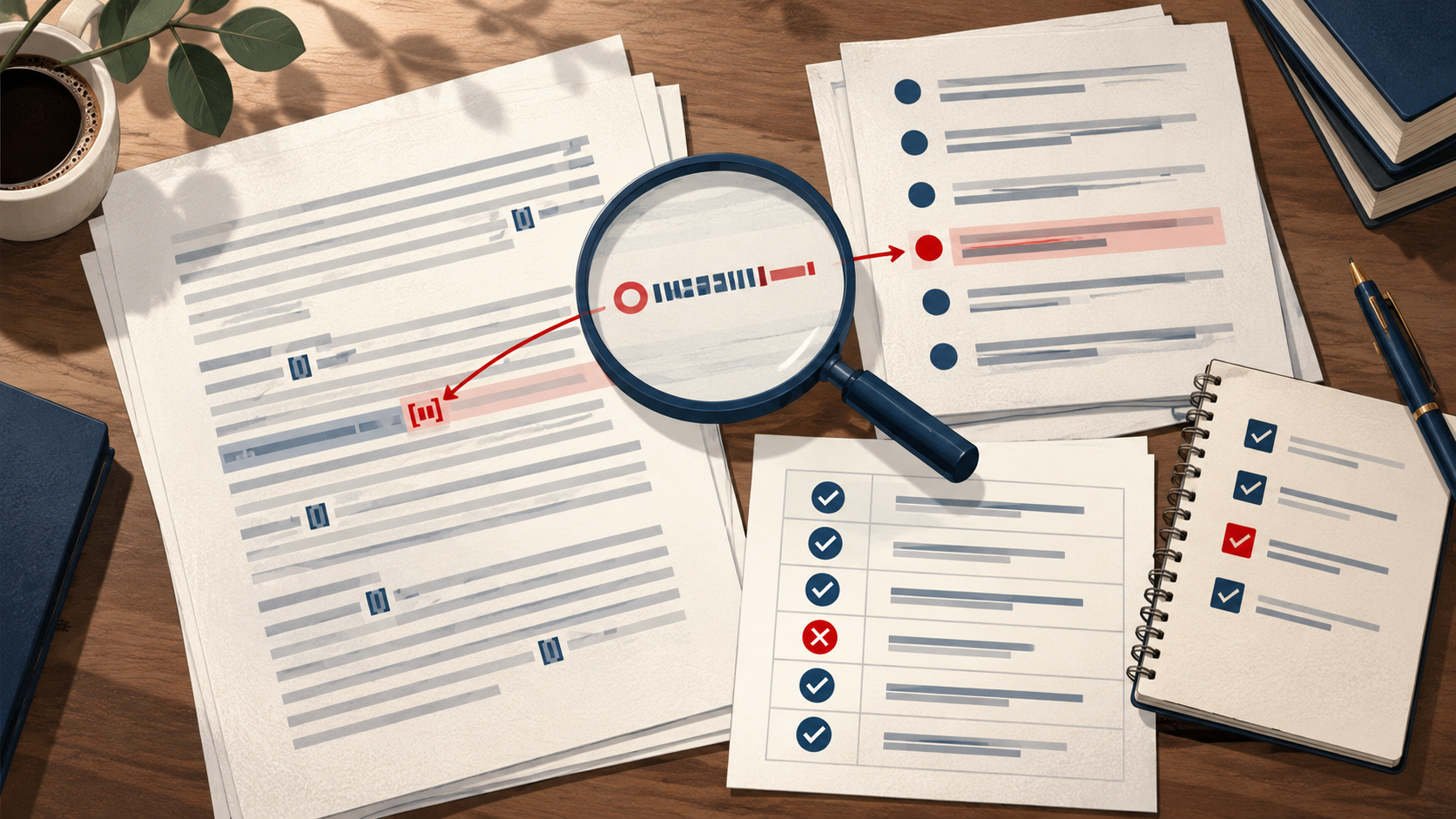
How to Run a Pre-Submission Citation Audit: A Controlled, Auditable Pass
A pre-submission citation audit is a single controlled pass through every reference in a manuscript, checking seven things in a fixed order: existence, metadata, claim support, citation placement, bibliography matching,

How to Search for Grey Literature Without Lowering Your Standards
Grey literature is where a focused evidence question often goes to be tested. Registers, agency reports, and institutional publications can carry outcome data that never appears in a journal article, but they arrive with

How to Set a Reading Order When the Deadline Is Close
When the deadline is close, the reading order is a decision tool, not a reading list. You are not trying to read everything on your topic; you are trying to spend your remaining hours on the papers that change what you w

How to Set Up Literature Alerts That Do Not Flood Your Inbox
Alert fatigue usually starts with a design mistake, not a database problem. A single saved query that mixes a broad field of interest with the exact question you are writing about will return both the papers you must rea

How to Triage 100 Abstracts Before a Deadline
A hundred abstracts and a fixed deadline is a screening problem, not a reading problem. The fastest reliable way through it is to write your inclusion rules first, test them on a small calibration sample, then sort every

How to Turn a PICO Question into a Search Strategy
A PICO question is a clinical question broken into Population, Intervention, Comparison, and Outcome. A search strategy is the translation of those four elements into terms a database can actually match. The work between

How to Turn a Pile of Papers into an Argument Map
A pile of papers becomes an argument map when each paper is assigned a job: which claim it supports, which claim it complicates, which objection it raises, and which gap it leaves open. The map is not a summary of everyt