
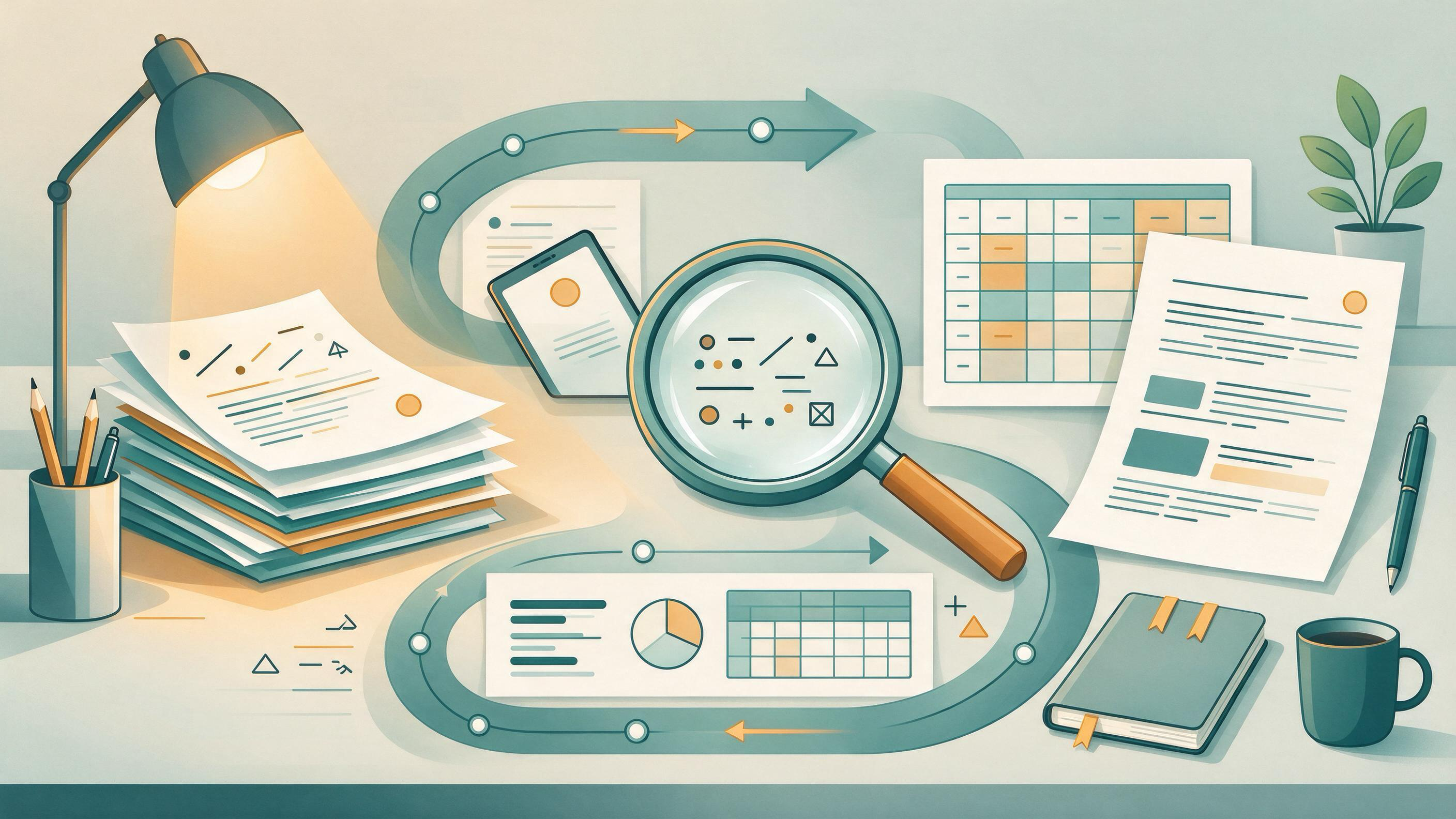
Abstract-First Reading vs. Methods-First Reading: Choosing a Strategy for Your Next Paper
When you are finishing a course paper, a thesis chapter, or a first manuscript, the pile of papers you need to read can feel like the real bottleneck. The practical question behind "abstract-first vs. methods-first" is n

AI-Generated Reading List vs. Curated Seed Library
You have a topic, a deadline, and a blank reference list. The question is how to fill it: let an AI tool generate a reading list from your topic description, or start from a curated seed library of papers you already tru
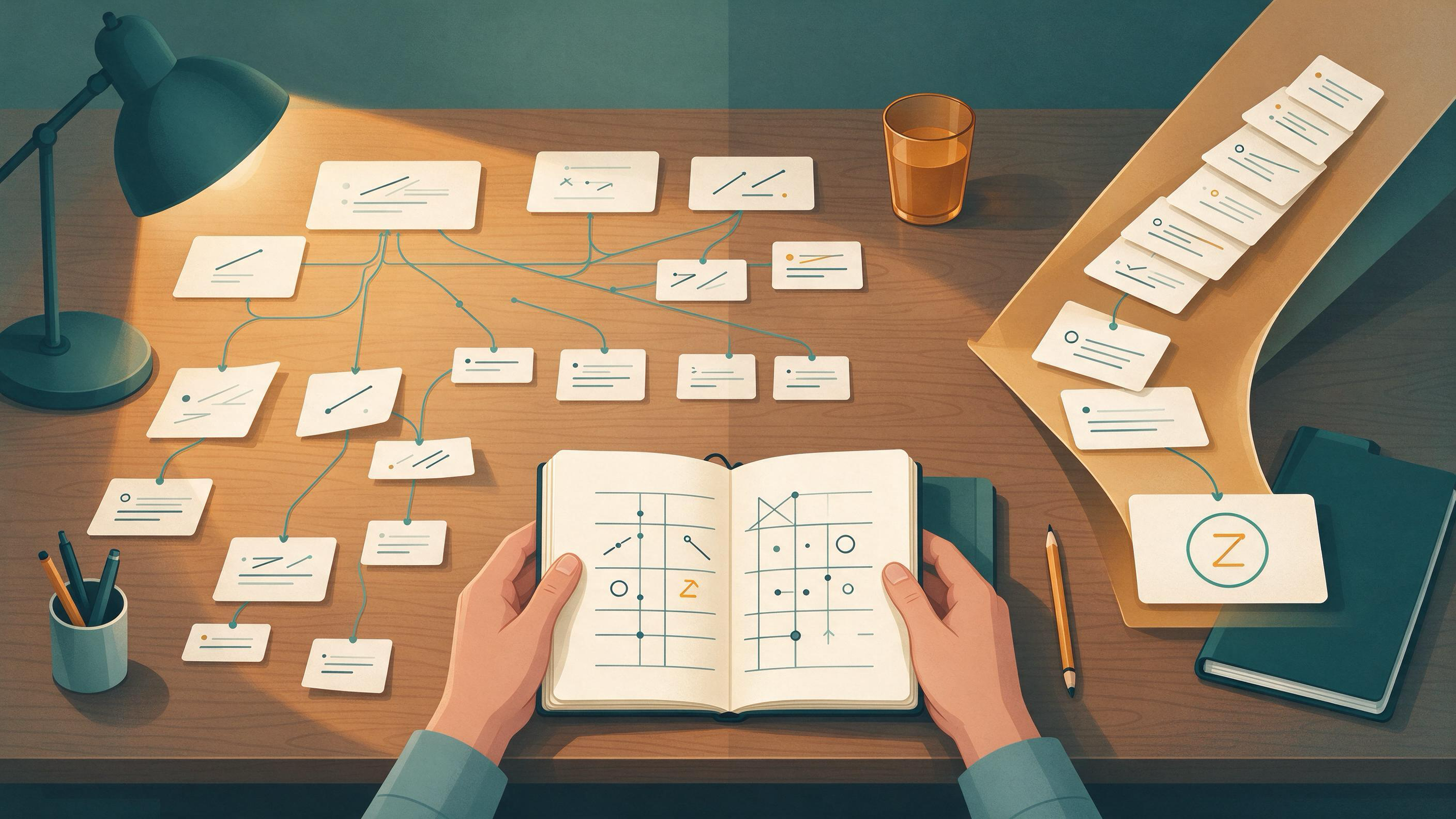
Broad Topic Search vs. Feasibility Search for a New Project
You have a topic, a deadline, and a vague sense that the literature is either too large to enter or too thin to support a project. The practical question is not which search is "better" but which one you should run first

Building a Reusable Research Knowledge Base
A reusable research knowledge base is a set of records, files, and decisions you can carry from one project into the next without rebuilding your reading from scratch. It answers four questions at any moment: what have I
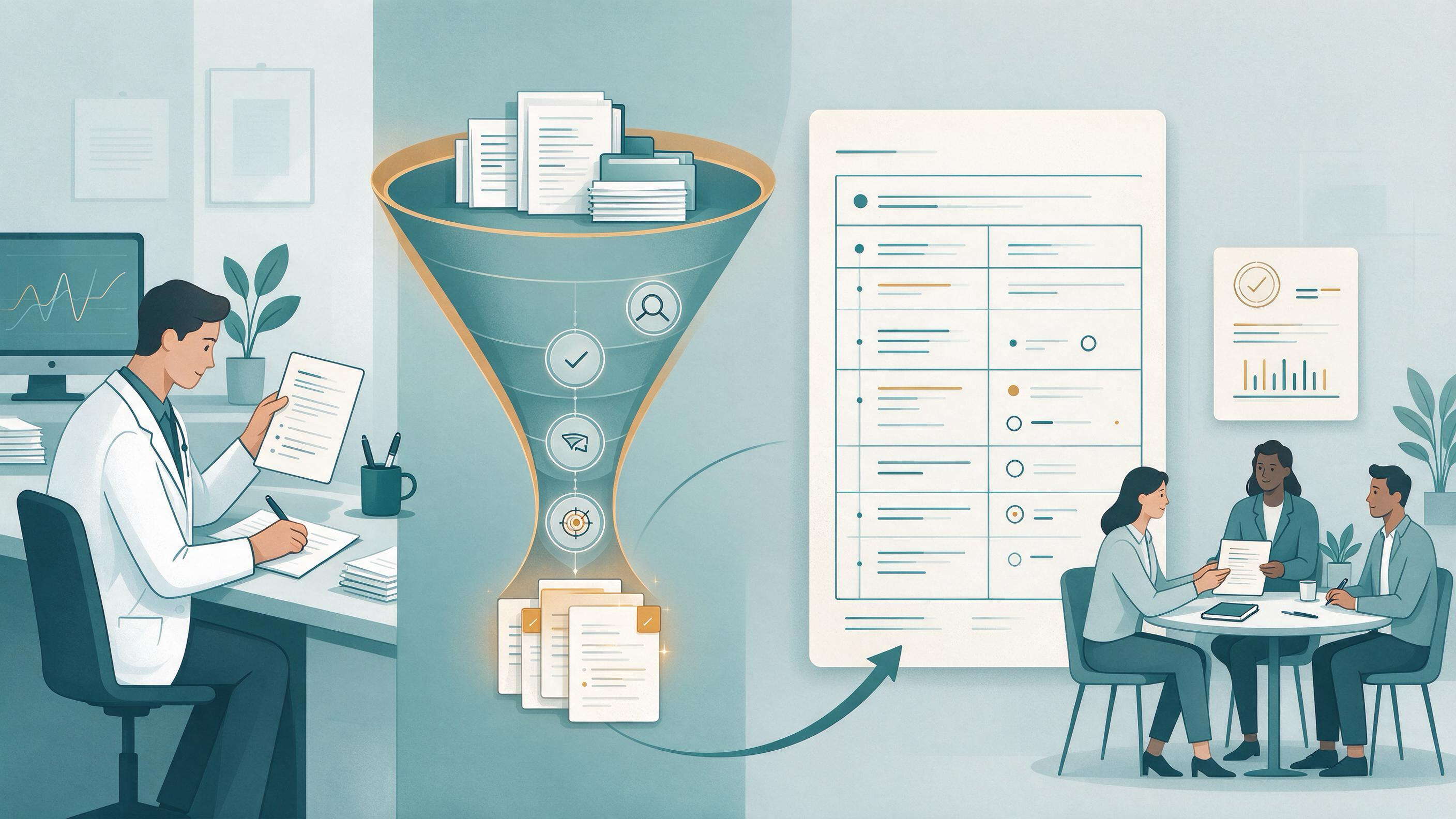
Clinical Evidence Briefing: From Question to Team-Ready Summary
A clinical evidence briefing turns a focused question into a short, defensible summary that a care team or research group can discuss together. The work is less about finding one decisive paper and more about building a

Clinical Guideline vs. Systematic Review: Where Should You Start?
Start with the clinical guideline when your question is about what a health system or professional body currently recommends for a defined population and outcome. Start with the systematic review when your question is ab

Collaborative Literature Review Workflow for Small Teams
A small team can run a literature review without a dedicated methods department if it agrees on a few artifacts early: a written eligibility rule, a search log, a deduplicated record set, a staged screening sheet, and a

Collaborative Screening vs. Solo Screening for a Small Review
You have a small review to finish — a course paper, a thesis chapter, or a first manuscript — and a pile of search results to sort into "include" and "exclude." The question is whether to screen alone or split the work w

Evidence-Backed Client Research: From Source Discovery to Final Deck
Client research fails in two predictable ways. One is a deck full of confident claims that cannot be traced back to a source. The other is a folder of PDFs and notes that never becomes a decision the client can act on. T
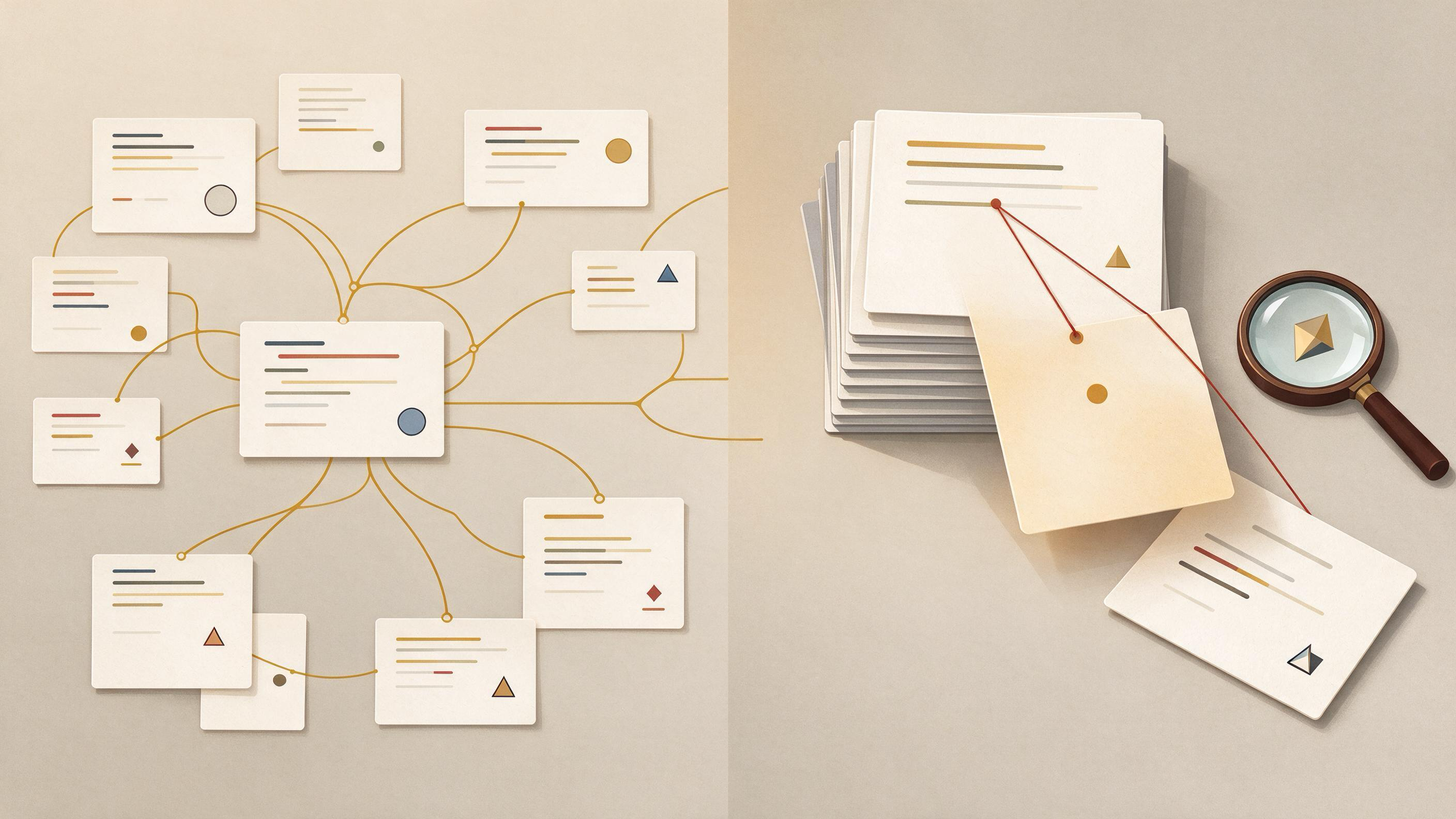
Exploratory Search vs. Known-Item Search: When Should You Switch?
You are revising a manuscript, and the reference list has a gap you cannot name. Or a coauthor has asked for "the paper that reported that effect" and you know it exists but not what it is called. These are two different