

Clinical Guideline vs. Systematic Review: Where Should You Start?
Start with the clinical guideline when your question is about what a health system or professional body currently recommends for a defined population and outcome. Start with the systematic review when your question is ab

Collaborative Literature Review Workflow for Small Teams
A small team can run a literature review without a dedicated methods department if it agrees on a few artifacts early: a written eligibility rule, a search log, a deduplicated record set, a staged screening sheet, and a

Collaborative Screening vs. Solo Screening for a Small Review
You have a small review to finish — a course paper, a thesis chapter, or a first manuscript — and a pile of search results to sort into "include" and "exclude." The question is whether to screen alone or split the work w

Evidence-Backed Client Research: From Source Discovery to Final Deck
Client research fails in two predictable ways. One is a deck full of confident claims that cannot be traced back to a source. The other is a folder of PDFs and notes that never becomes a decision the client can act on. T
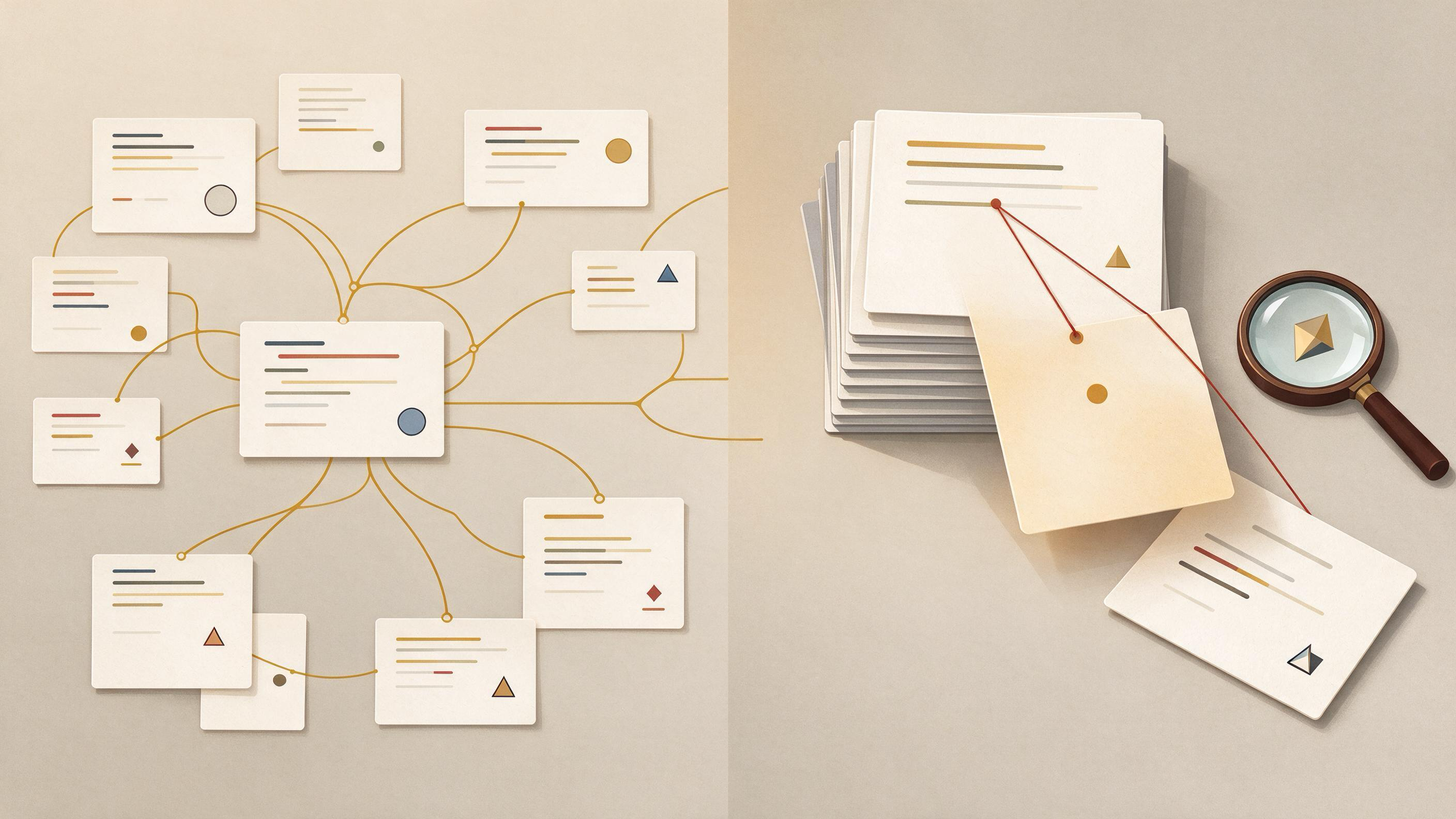
Exploratory Search vs. Known-Item Search: When Should You Switch?
You are revising a manuscript, and the reference list has a gap you cannot name. Or a coauthor has asked for "the paper that reported that effect" and you know it exists but not what it is called. These are two different

Full-Text Annotation vs. Structured Data Extraction: Choosing the Right Evidence Trail
You have a folder of PDFs, a manuscript deadline, and a coauthor asking why a particular number appears in your results table. The question behind "full-text annotation vs. structured data extraction" is practical: which

How to Annotate Papers So Your Future Self Can Reuse Them
Annotation usually fails for a simple reason: it is written for the person you are today, not the person who will reopen the file in six months. You highlight a sentence because it matters now, but you do not record why

How to Archive a Literature Search After Submission
A submitted manuscript is not the end of your search record; it is the moment the record becomes something other people may need to inspect. Coauthors may ask which terms you used, a reviewer may request a search update,

How to Audit an AI-Written Background Section Before You Keep It
An AI-drafted background section is a starting point, not a finished chapter. Auditing it means checking three things in order: that every claim traces to a real source you have actually read, that the selection of sourc

How to Build a January Reading Plan for a New Research Project
A January reading plan is a short, dated schedule that turns a vague new project into a defined reading scope, a documented search, a screened set of papers, and a first synthesis you can show a supervisor or advisor by